
Many of you know that my husband Scott and I recently moved to southwest Missouri and bought some acreage. Needless to say, we feel like we are beginning a new and exciting chapter of our REAL food journey.
We are diving in and learning so much – how to start and grow a garden, how to compost, and how to best take care of our land. And I know there will be much more to learn along the way. At times it can feel a little overwhelming. A very good friend recently reminded us, “This is about progress, not perfection.” Funny…that’s exactly what we tell people who are beginning their REAL food journey!
One topic we keep hearing more and more about – and maybe you have too – is regenerative agriculture. In fact, we recently sponsored a Farm to Fork Summit where this was a major focus.
So what exactly does regenerative agriculture mean, and how does it relate to the food we eat?
What is Regenerative Agriculture?
At its core, regenerative agriculture is about working with nature instead of against it – so the land becomes healthier over time rather than more depleted. It’s a way of farming that focuses on restoring soil, improving ecosystems, and ultimately producing more nutrient-dense food.
What makes it “regenerative?”
Instead of simply sustaining the land (keeping things the same), it actually builds things back up, especially:
Soil health – increasing organic matter and beneficial microbes
Water retention – helping soil hold moisture and reduce runoff
Biodiversity – encouraging plants, insects, and animals to work together in a balanced ecosystem
All of this starts with something we don’t usually think about very much…Soil!
What does this have to do with the foods we eat?
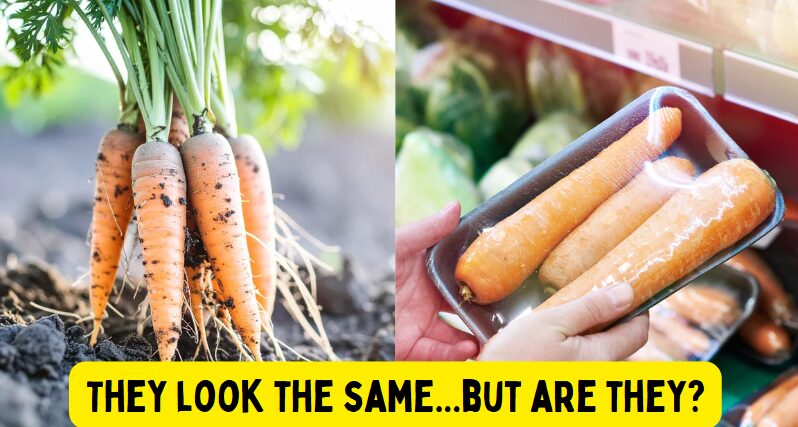
Imagine two carrots. They look exactly the same. Same color. Same crunch. Same size.
But one might actually be significantly more nourishing than the other. Not because of how it was cooked. Not because it’s organic vs. conventional.
But because of something most of us never think about: The soil it grew in.
Nutrition Starts in the Soil
When we think about eating REAL food, we usually focus on things like:
- Ingredients
- Cooking methods
- Avoiding ultra-processed foods
These are all very important.
But there’s another part of the story we don’t talk about as often: Nutrition doesn’t start in the kitchen. It starts in the soil.
When food is grown in healthy, living soil:
Plants can absorb more minerals and nutrients
Crops often develop richer flavor
Farmers rely less on synthetic fertilizers, herbicides, and pesticides
So when you choose REAL food, you’re often (knowingly or not) supporting a system that:
Prioritizes quality over convenience
Values natural processes over industrial shortcuts
Produces food that is closer to how it was originally meant to be eaten
Soil is Alive
Soil isn’t just “dirt.” It’s actually alive — full of billions of tiny organisms working behind the scenes. Think of them as a microscopic construction crew helping plants access the nutrients they need. When that system is thriving, plants can pull from a wide variety of minerals and compounds… which eventually become the nutrients we eat.
If this sounds familiar, it should. This concept is very similar to our gut health. Our gut is home to trillions of microbes – bacteria, fungi, and other organisms that make up our microbiome. When that microbiome is diverse and balanced, our bodies function better. When it becomes unbalanced, health problems can begin to develop.
In many ways, soil has its own microbiome. And just like our gut, when that system is healthy, everything works better.
Why This Matters
The reality is that not all soil is created equal. In many modern farming systems, the focus has been on producing food that is:
- Fast to grow
- Consistent in appearance
- Easy to transport long distances
- Able to last longer on store shelves
While this has made food more widely available, something important can sometimes get lost along the way: Nutrient density.
In other words, food can look beautiful on the outside… but not be as nourishing on the inside. In fact, research over the past several decades has found measurable declines in certain nutrients in fruits and vegetables.
There are several reasons for this, including:
- Repeated tilling that disrupts soil biology
- Heavy use of synthetic fertilizers, herbicides and pesticides
- Lack of crop diversity
- Reduced organic matter in soil
When soil loses biological life and mineral balance, plants can still grow quickly – but they may contain fewer nutrients per bite. That’s one reason why two tomatoes can look identical, yet one tastes a little bland while the other is bursting with flavor. That flavor difference often traces back to the soil.
The Hidden Workforce Beneath Our Feet
Healthy soil is packed with life — bacteria, fungi, and other microorganisms that help plants access nutrients they otherwise couldn’t reach. Plants don’t just “eat” nutrients directly. They rely on billions of microbes that help:
- Break down organic matter
- Unlock minerals in the soil
- Move nutrients into plant roots
A plant can only absorb what is available in the soil. If the soil is rich in minerals, microbial life, and organic matter, the plant has access to a much wider range of nutrients. Those nutrients then become the vitamins, minerals, antioxidants, and phytonutrients we rely on for our own health. As many soil scientists like to say: “We are not just what we eat. We are what the soil produces.”
The Good News
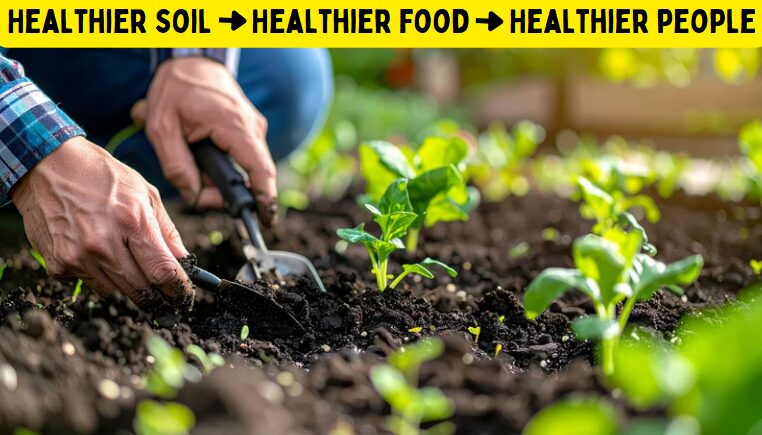
The good news is that many farmers are beginning to focus on building soil health again, not just growing crops. This is where regenerative agriculture comes in.
Some of the practices regenerative farmers use include:
- Growing a variety of crops instead of just one
- Keeping the ground covered with plants (cover cropping)
- Adding compost and natural nutrients
- Reducing heavy tilling
- Integrating livestock into farming systems
And when farmers do this, the food often becomes more flavorful, more resilient, and yes — more nutrient-dense.
What This Means for You
You don’t need to become a soil scientist to benefit from this. It’s really just about becoming a little more aware, mindful and curious about where food comes from. A few simple things you can do:
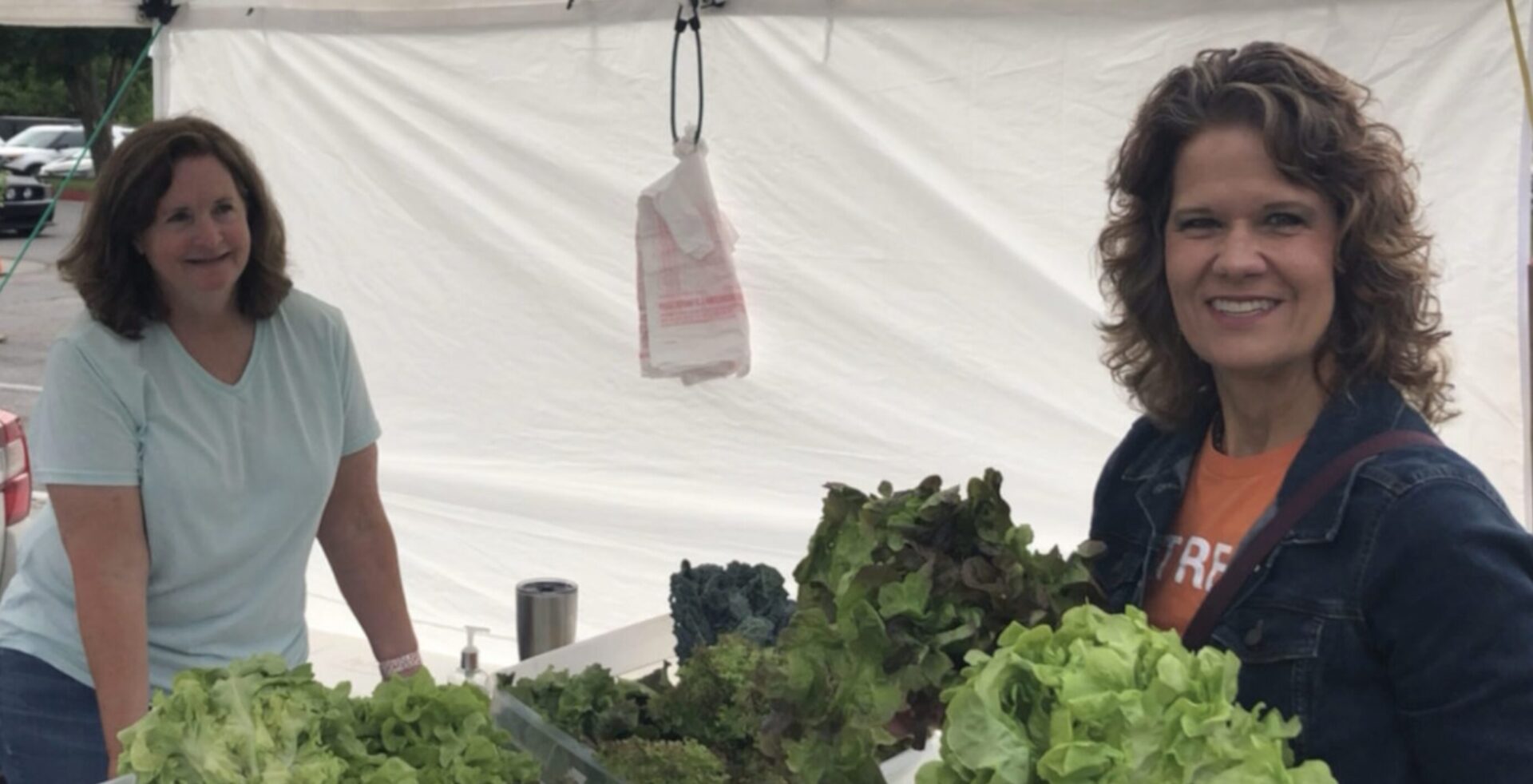
- Buy local when you can and talk to the farmers (this is the best way to find the ones who are focused on improving the soil) – this is why we LOVE the farmers’ market!
- Enjoy foods that are in season
- Prioritize whole, minimally processed foods (reducing demand for highly processed foods that are largely made from monocrops like corn, soy and wheat)
- Pay attention to flavor – it’s often a clue about quality
And most importantly: Don’t stress about doing this perfectly. Continue to eat REAL food, with an emphasis on vegetables, fruits, and plants! Even small shifts towards getting produce from regenerative farmers will make a difference. If you’re interested in learning more on this topic, a fascinating documentary to watch is Kiss the Ground.
The REAL Food Perspective
This is one of the reasons the REAL food philosophy matters so much. When we prioritize whole, minimally processed foods — especially those grown by farmers who care for the land — we are supporting a food system that values nutrient density, not just calories.
And that connection between soil, food, and health is something we’re excited to keep learning about in this new chapter of our journey! We welcome any tips!
Excellent newsletter, Krista. I recommend the documentaries Kiss the Ground (2020) and Common Ground (2023), both on Amazon Prime, for more information about the benefits of regenerative agriculture.
Bev – Thank you for the feedback and it is so great to hear from you! We will have to check out Common Ground, I am sure we will love it! Thank you again!
This article has been most helpful as my husband and myself are trying to grow our food.
Thank you so much, I am so happy it is helpful!
Love this article! Something to show my husband so we can understand the importance of our soil. Had a veggie garden for years and in our move to downsize our house my husband built me some beautiful raised bed gardens. Compared to most people it’s quite a bit of garden space. We have filled with a friends aged horse manure and sawdust, and in February I amended with some ( 1 yard)garden soil from a landscape company. ANYWAY very interested in this will watch the documentary and if you have any other suggestions, please add them!
I also loved this article! My husband and I moved to the NC mountains about 4 years ago and started our garden 2 years ago. First year was not a great attempt – mountain soil is a lot of clay. Second year we learned more and prepared our soil. Wow! The results were amazing. Tomatoes & cucumbers coming out of our ears. Summer squash, eggplant, bell peppers, jalapeños, etc. Our only loss was all our sweet corn … have to figure out how to thwart those raccoons. And the flavors were SOOOO much better than store bought. We started composting this winter and have just started planting some of our cool weather items like potatoes. I’m retiring next month and this is going to be my hobby this summer. Also learning to can so we’ll have fresh veggies into the fall/winter! I’m sure you’ll just love it too Krista!
Teresa – thank you so much, I love that you are on this gardening journey with us!! I am curious what you did to improve your soil, we will take all of the advice we can get! Thank you!
Well, the first year we tried to manually till the soil and then added in some top soil as best we could We did do a little generic fertilizer. Some things grew but we had as many weeks as veggie plants … lol. We got a few tomatoes but they only grew one small batch.
The next year we did more homework and even took a class or two and took advice from our local NC State Extension. From what I understand most states have this type of service. If you can find it in Missouri you won’t be disappointed. They’re really good about giving local advice. In NC I think they’re associated either the Dept of Agriculture.
One of the things that really help over the fall was a good weeding, more thorough tilling and then covering with something to kill all the weeds. We also built some raised beds and filled with 6+ inches of top soil. Finally we got a soil test directly from the area we planned to plant. That analysis gives you the mineral composition of your soil and give you the exact NPK (nitrogen, phosphorous and potassium) mix you should use and how much per square foot. That all seemed to be a game changer for us.
This year we’re adding in the composting and hope that will do even more. We don’t use any pesticides and the 2nd year even had better results just because of the better soil. We did use a little neem oil and that was about it. Final 2 tips … fencing or netting to keep rabbits, raccoons, deer, etc out is key. And 2nd year we also learned that good support or trellises was important for plans that bore heavier things. That helped keep them off the ground.
Happy to chat more offline if you’d like to email or something. Don’t want to bore everyone here. But happy to chat here if no one minds or it’s helpful for others. I’m still learning, but did have some good progress last year. Full disclosure – my hubby did most of the hands on work. I was the research. Now that I’m retiring end of April, i plan to be much more hands on this year though!
Our only success in battling the raccoons & our sweet corn was to put up an electric fence around the corn rows. Already a fenced in garden, but that does not deter the raccoons.
Thanks Teresa!
You’re welcome & GOOD LUCK !
Excellent article. I grew up in southeast Iowa and my dad was a farmer. I babysat a lot growing up. One little guy, who was about 4, wanted me to play “farm” with him. His dad was also a farmer. One of the first things he said was “we are going no-till”. It was so funny. I told his mom and dad when they got home that he is paying attention to their conversations!