
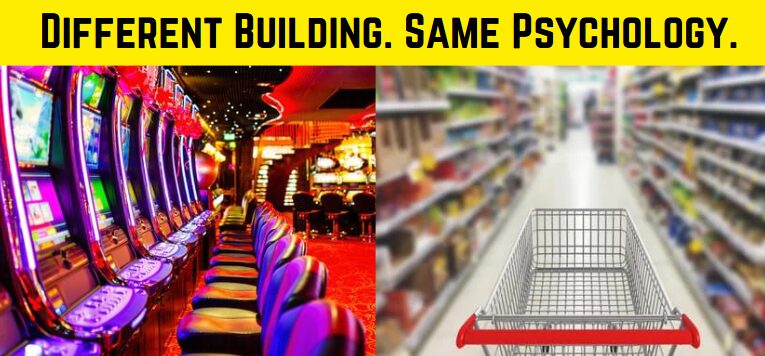
Do you ever wonder why grocery stores are laid out the way they are?
Why does the milk always seem to be in the farthest corner from the entrance?
Why do you see the floral section right when you walk in?
This might surprise you. The same behavioral design principles used to keep people inside casinos – spending more money, staying longer, making impulse decisions – are also used in many modern grocery stores.
This planning isn’t because they are evil. And it’s not because someone is out to get you. It’s because grocery stores are in business to make money. Their goal isn’t health – it’s profit.
We recently read something written by functional medicine physician Dr. Mark Hyman, who said:
- Every aisle is strategic.
- Every shelf is calculated.
- Nothing is random.
The good news? Once you understand the system, you can shop even smarter.
The “Health Halo” Effect
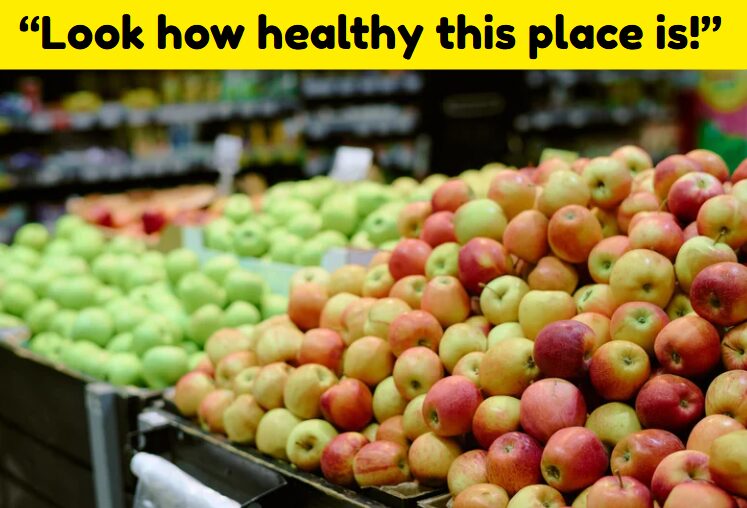
What’s the first thing you see when you walk into the grocery store?
Fresh flowers. Bright produce. Beautiful colors. This creates a health halo – a subtle signal that says, “This is a healthy place.” You feel good about yourself before you even start shopping.
But then…just a few steps away, the bakery is pumping out freshly baked warm cookie aromas (sometimes artificially enhanced) to trigger hunger and maybe even a little nostalgia (that comfort food feeling that the thought of a warm gooey cookie provides). Smell is one of the strongest drivers of appetite and memory. You just started your shopping – and your brain is already being nudged.
Why is the Milk in the Back Corner?
Have you ever noticed how milk, eggs, and other staples are usually in the furthest back part of the store? That’s intentional.
These are called “loss leaders.” Stores price these essentials competitively – sometimes barely making a profit – because they know you’ll walk past dozens of high-margin products to get there.
The longer you walk…the more you see…the more likely you are to buy something you didn’t plan on. In fact, it is often cited that around 60% of grocery purchases are unplanned.
“Eye Level = Buy Level”
The most profitable products sit directly at your eyesight line. That’s not where the healthiest foods are. That’s where you find the brands that can afford the highest slotting fees (payments made to obtain the best shelf space).
Vegetables don’t have marketing budgets. Big food companies do. So, guess who gets the best real estate?
Carts, Music, and More
Shopping carts haven’t always been so big. As the modern grocery stores have evolved, so have the size of the carts. If you have been to a warehouse club like Costco or Sam’s Club, you know exactly what we are talking about. Of course, bigger cart → looks emptier → you buy more to fill it. I don’t know about you, but it’s refreshing to walk into a store like Trader Joe’s and grab a “regular sized” cart – they don’t need the massive carts because their variety of products is not the same as the superstores.
Tip: Don’t miss our video with some of our favorite things to buy at Trader Joe’s.
And there are other things that influence your decisions:
- You may notice slower, mellow background music, which encourages you to slow down, browse more, and of course spend more.
- Volume is also used strategically. Research shows that louder music tends to push people towards higher-calorie or indulgent foods. Lower volumes encourage calmer and slower browsing. Many stores adjust the volume in different sections of the store or at different times of day to influence shopper behavior.
- End caps (the displays at the ends of the aisles) may look like great deals – but they often carry the highest profit margins in the store.
None of this is accidental. Modern grocery stores employ behavioral scientists. It is sad but true, they use the stores as the laboratories – and we’re part of the experiments.
Why Candy and Soda Are Always at the Checkout
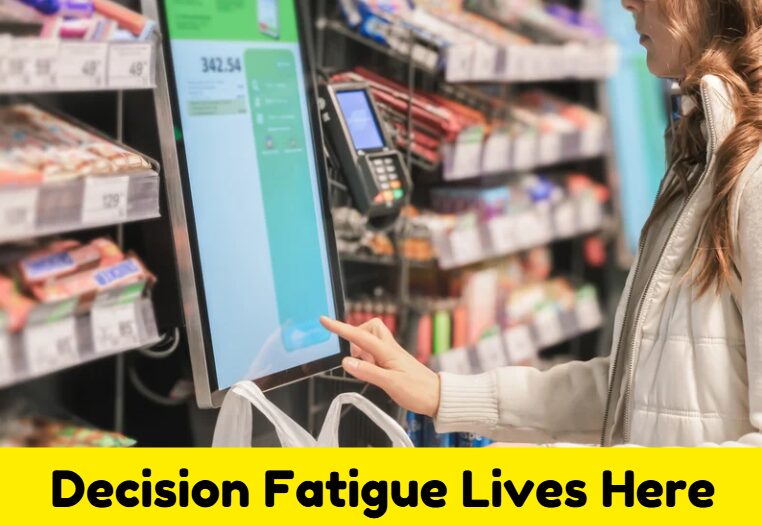
Here’s where it gets interesting. After about 15-20 minutes of decision-making, something happens in your brain: decision fatigue.
Your prefrontal cortex – the part of your brain responsible for impulse control and long-term thinking – gets tired. Willpower is depleted. And self-control drops.
So where do they place the sugar? You got it – right at checkout. They wait until your brain is exhausted – and then hit you with the fastest dopamine fix available. It’s not about weakness. It’s just how your brain works.
So What Can You Do?
Here’s the good news! When you understand the environment, you can navigate the store just like you can navigate the casino. Here are some simple strategies:
- Shop the perimeter (mostly). That’s where the one-ingredient vegetables, fruits, meats, eggs, and other whole REAL foods typically live. Eat REAL America members often say, “By the time we leave the produce section, 2/3 of our shopping is done” and “We are spending less time and money shopping…there are aisles in the middle of the store we don’t even visit anymore.”
- Look up. Look down. Read labels. Some of the best choices are on the top or bottom – not necessarily at eye level. And always read the ingredient labels – don’t be fooled by the health claims on the front of the package.
- Always use a list. Know what you’re buying before you go. If it’s not on the list, it doesn’t go in the cart. The exception to this rule is veggies, fruits and your REAL ingredient staples – buy all of those you want!
- Never shop hungry. Low blood sugar makes you highly susceptible to impulse purchases.
- Be efficient. Have a strategy and know your route. Get in. Get out. The longer you linger, the more your brain wears down.
And don’t forget to use our Grocery Store Cheat Sheet and our Grocery Store Tours.
Eat REAL Food!

Your grocery store isn’t evil. It’s a business. Its job is to maximize profits for its owners – not to protect your health.
Protecting your health is your job. At Eat REAL America, we believe healthy eating shouldn’t require superhuman willpower. It should be supported by habits, systems, and environments that make it easier.
That’s how we EAT REAL FOOD in a world designed to sell us something else.
You can’t redesign the grocery store. But you can redesign how you shop.
This is actually a really good article. I utilize similar merchandising techniques, as well.
I worked in grocery stores for 48 years until I retired. The information here I can say is 100% correct. Grocery stores are set up for profit, just like any other business. Nothing wrong with that, you just have to be aware so you can make healthy decisions. Over a quarter of the stores aisles are dedicated to soda pop, chips, cookies, crackers, and other snacks (all highly processed foods). In the frozen food aisle, there are very good things like frozen fruit and vegetables, but the majority of the items found there, frozen meals, pizza, ice cream, etc., once again are highly processed and unhealthy foods. If you read the labels on some of those items, you would be shocked to see how much saturated fat, sodium, etc. hides in those foods. There are some pretty healthy things that are located in the center stores aisles like canned beans, etc. that are minimally processed, but sticking to the perimeter of the store is the best bet for the healthiest foods.
I know this is nothing new for those who have taken any of the classes that Zonya and Krista offer, just my perspective from someone who worked thier whole life in the grocery stores.
What an excellent read for today. One of my big mistakes was to go shopping b/c I was hungry. I no longer do that. Half hour before I make sure I drink some water and eat some veggies so that I don’t go into the bakery area. We do much better if I do all my baking in my own kitchen. I find it very hard to stay away from the snack aisle. If I do go that direction, I keep telling myself, “it’s no good for you”. I can’t believe that money I save not purchasing that stuff. If we need chips to go with our meal, I will make my own and believe it or not we got to enjoy our fresh chips made in our oven . Thanks to you, Krista, and to Zonya, we are enjoying our fresh food much more.
I have a get in, get out mentality to avoid buying what I don’t need on top of sticking to the list and even utilizing grocery pickup when I’m too busy— although I enjoy picking out my own produce!! I so appreciate the tip about staying on the perimeter of the store and think of this often… trying to teach my family to do the same. It’s interesting about the consumer mentality with music style and volume… makes a ton of sense and helps me understand why loud music annoys me while I’m shopping— it puts me in decision fatigue even quicker! This article info should be taught in high school marketing classes so younger generations are aware!!
Great advice, great article. Thank you!